Showing posts with label BooksFirst. Show all posts

Sunday, June 01, 2014

BooksFirst: April-May 2014

Books Bought

Alison Wonderland by Helen Smith

Audiobooks Bought
The Fault In Our Stars by John Green
Lunatics by Dave Barry and Alan Zweibel
Screw Everyone by Ophira Eisenberg
One More Thing by B.J. Novak
Shakespeare by Bill Bryson


Books Read

Billy Lynn's Long Halftime Walk  by Ben Fountain
The Hammer of Witches by Shana Miwalski
Flash Boys: A Wall Street Revolt by Michael Lewis
Alison Wonderland by Helen Smith


Books Heard

Swamplandia by Karen Russell
The Fault In Our Stars by John Greene
Lunatics by Dave Barry and Alan Zweibel

Comments
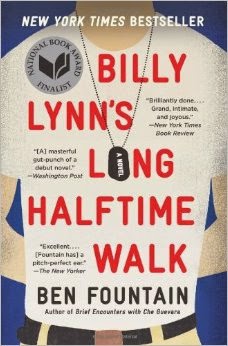
One of the most recommended books of 2013 from the podcasts I listen to was Billy Lynn's Long Halftime Walk  by Ben Fountain. As the title suggests, the story takes place at a football game, a Thanksgiving Day Dallas Cowboys game shortly after the beginning of the Iraq War to be exact. Billy Lynn is one member of a squad being honored during a halftime performance by a pre-break-up Destiny's Child. 

The technical tour de force is that with a very minimum of flashbacks, the entire novel takes place between the arrival and the departure of Billy and his fellow squad members at the stadium. And a lot happens in between. It's almost unfair to go into all the incidents and running stories but they involve cheerleaders, Hollywood agents, greedy sports team owners, and jingoistic fans. 

The only complaint, and one that I was aware of because of reviews beforehand, is that Billy as a nineteen-year-old enlistee is perhaps a bit too sophisticated in his worldview. As a first person narrative, he thinks A LOT. Also, some of the irony from hindsight is just a little too pat. But the book is a great look at a rather specific time and place.

Shana Miwalski is the second member of the OverthinkingIt.com website whose book I've read. John Perich has written two thrillers, reviewed here and here. Miwalski is working in a different genre, young adult historical fantasy. In her Hammer of Witches world, the era of Christopher Columbus has real magic which is being suppressed by an organization parallel to the never-expected Spanish Inquisition. 

Like Harry Potter, Baltasar Infante is a presumed orphan who is unaware of his powers and destiny until he joins an expedition to the yet unfounded New World. There he must battle multiple other magical factions. 

The book is strongest in Spain as young Baltasar figures out his true heritage. The story bogs down when they all reach Hispaniola and the magic starts flying fast and furious. The magic itself is clever and internally consistent but there is no real explanation of how it remains so hidden if it is so powerful and widespread.

Columbus as a character is cut down the middle between the noble explorer of grade school history and the evil genocide of, say, Orson Scott Card's Pastwatch (a book I have tried multiple times to finish). By being ambiguous on Columbus, it pulls its punches a little. There are a couple of strong female characters in the book and it is a quick read but I'm not sure it really breaks new ground.

Anything by Michael Lewis is worth reading and Flash Boys is no exception. It is an exceptionally technical story about how a stock trader discovered that this orders were being front-runned by high frequency trading (HFT) programs that were using advantages measured in nanoseconds. It's a maxim that the real scandal is not always what is illegal but what is perfectly legal. And front-running is not only perfectly legal, it seems like the means to do it were deliberately baked into the system.

In some ways this book is a good counterpoint to his very first book Liars' Poker in that it shows just how much the world of finance has changed in just a few decades. Rather than loud mouthed Big Swinging Dicks, the real money is made by secretive quants running obscure algorithms to make low margin high volume trades. 

That front-running is intrinsically unfair seems obvious but regulators and brokers seem oddly indifferent to it. The one hero is Brad Katsuyama who not only discovers how he is being sniped but sets up an exchange designed to deliberately negate the advantages the HFT programs have. 

The book is fairly short and often reads like a padded out magazine article which may be what it started out as. There are certain break points where the topic and point of view change. And the book should be generating more outrage than it has.

Another light fantasy is Alison Wonderland which I bought on my Kindle based on some good blurbs and a deep discount from Amazon. I am a sucker for Lewis Carroll related whimsy but this novel only had the thinnest of connections, mostly the character's name.  

Alternating between first person and third person segments, it tells of a woman working for an odd detective agency that gets tangled up with an incompetent secret conspiracy. Also involved are genetic experiments gone wrong, baby-snatching new age hippies, and un-whacky neighbors. 

The novel keeps crossing the line between absurd and merely silly. The improbable events stack up without ever really paying off. Characters drift in and out and random. And none of the story threads really tie together. I really tired to like this book but could never just get into the spirit of it.

 Swamplandia is another award-winning novel that came highly praised by sources I respect. But it too had some serious flaws. I love tales from southern Florida but I lean towards the Dave Barry/Carl Hiaasen absurdist branch. Karen Russell's variety of Florida Gothic is much more ochre-colored than the dark humor I prefer.

The story takes place around a tourist attraction which is seedy and run down by even Florida standards. Swamplandia is an alligator wrestling theme park of dubious authenticity which has fallen on hard times. Our heroine, Ava Bigtree goes on a Dante-esque quest to rescue her mentally ill sister from ghosts who may or may not be hallucinations. Meanwhile her brother goes to work at a rival theme park with an equally Dante-esque motif. 

Like Alison Wonderland, it alternates between first person and third person segments which gives it the feel of being two separate stories mashed together. It seems that the Ava parts were expanded from an award-winning short story while the Kiwi sections are original to this novel. 

Part of the difficulty with the novel is the odd jargon and syntax. The Bigtrees call alligators "Seths" and what is amusing at first just becomes eventually tiresome. And the symbolism of Ava's red seth is troublesomely obvious as it is associated with a disturbingly brutal portion of the book. The humor and wry observations don't really make-up for the gut-punching darkness. 

Teen fiction has been dominated by dystopian fantasies like the Hunger Games series (reviewed here and here) but the hottest book of the past couple of years has been the cancer weepie The Fault In Our Stars by John Green. My entry into John Green was through his YouTube Vlog Brothers series which are quickly edited stream of conscience videos. I wasn't too sure how that frantic voice would translate into a novel length story. Very well as it turns out.

The story of the novel and the forthcoming major motion picture is about a teenage girl with near-terminal (if that can be such a thing) cancer who meets a hunky cancer survivor at a support group meeting. But as one might expect, the course of true love doesn't run smooth. You just know someone's going to be crying by the end of the book, most likely the reader. Since I was listening to the audiobook it made for some tough driving in places.

What makes the book different is the humor, which is mostly John Green's voice. Hazel and Augustus have chemistry that just leaps out. Their banter is both witty and heartwarming. One tirade about eggs being unfairly pigeonholed as a breakfast food is hilarious. The book deliberately subverts a lot of the tropes when telling stories about dying teenagers. It's reputation is well-deserved and definitely merits an audience beyond the teenaged girl vlogger audience Green has cultivated.

I've been on a bit of a Dave Barry tear lately and a friend recommended a book he cowrote with Alan Zweibel called Lunatics. The titular crazy men are two soccer dads from suburban Jersey who let a refereeing dispute get way out of hand. And I mean WAAAAY out of hand. When I accused Insane City of not living up to the promise of its title, no such charge will stick with this book. Each situation the two gets more and more outrageous. The point of suspension of disbelief is reached real early in the book and every thing after that gets more and more ludicrous.

The highlight of the book occurs very early and involves a Prius on the George Washington Bridge and a runaway lemur. By the time the various international incidents start occurring, the shark has been jumped.

The majority of the book is told as alternating first person narratives and the two characters do have very distinct personalities. On the audiobook they are read by the two authors which adds quite a good bit of texture. Towards the end when the point of view shifts to news report parodies, it starts to lose its immediacy.

A little Barry goes a long away and Lunatics goes on way too long. 


Sunday, March 02, 2014

BooksFirst - February 2014

Books Bought  
Billy Lynn's Long Halftime Walk by Ben Fountain  

Books Read  
The Left Hand of Darkness by by Ursula K. LeGuin  
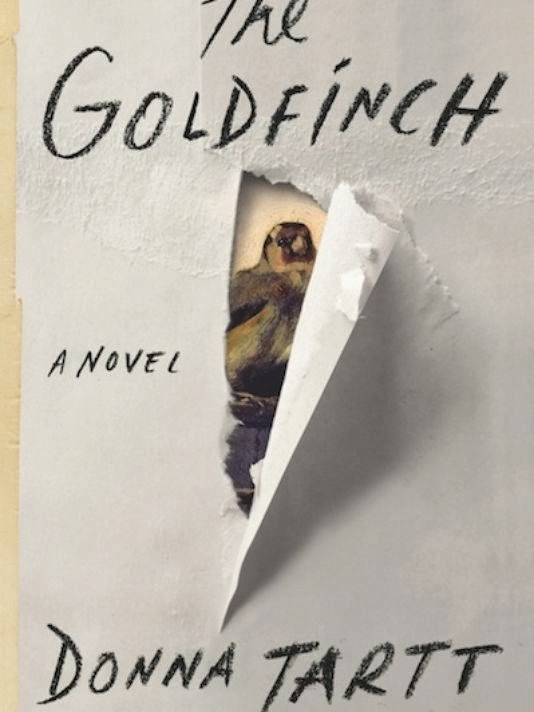
The Goldfinch by Donna Tartt

 Books Heard  
The Bedwetter: Stories of Courage, Redemption, and Pee by Sarah Silverman  

Comments
 
The Left Hand of Darkness is a multi-award winning novel by Ursula K. LeGuin which has long been a book I've been needing to read out of some sense of historical literary obligation. Unfortunately, I found it as tough a slog as the long trek through the frozen wilderness that makes up the last third of the book. My science fiction professor in college warned me as much when he said the somewhere along the line the LeGuin had gotten a snootful of Ulysses and everything had to be an epic journey.

The premise of the novel is that an emissary from the Galactic High Council or whatever is trying to make first contact with a lost colony. The twist is that not only is this particular planet a marginally habitable world that makes Hoth look like Club Med, but the inhabitants have all evolved (it's not ever clear how much genetic engineering is involved) into an androgynous single gender so it's the male human from another world that is the sexual freak. However, not much is really done with this. LeGuin goes a little into how a single gendered society would work (more caring, less warlike, and absolutely embracing of family leave) but except for some unrequited sideward glances, nobody breaks any taboos in any interesting ways. Perhaps this was much, much more groundbreaking in the pre-Stonewall 1950s but now it seems almost tame.

I just never quite knew what the book was trying to say and despite being only 200 pages in my paperback edition, it took a long time not saying it.

Epic long books have to be really, really good to merit their investment in time and paper and The Goldfinch manages it. I came in with low expectations and was rapidly blown away. Speaking of expectations, low and great, I was not far into this book before I started making obvious parallels to Dickens. A young semi-orphan is shuffled around in several socially distinct milleaus where he is forced to survive. There is a scampish sidekick on the blurry side of the law. A sickly romantic interest that fate keeps away. A cruel and dangerous father. A kindly benefactor. And odd coincidences and circumstances to just tread the line of laughable implausibility. And I'm not alone in this observation as nearly every review I've read has made the same observation. Charlie might has well have been credited as cowriter.

The MacGuffin of the novel is the titular painting of bird chained to a post. I quickly realized that I had seen this painting very recently. It was one of the Dutch masterpieces that was an exhibit with another painting with literary inspirations, "The Girl With The Pearl Earring". In The Goldfinch, Donna Tarrt rather than wrapping a story around the creation of the painting, literally wraps the painting up in mystery and adventure. The painting is enigmatic even before it it burdened with the weight of all the symbolism that ties it to the perch.

And despite the length, the book is well-paced and taut. Everytime, just as I was getting bored or distracted, some plot twist would come along and suck me back in. My one peeve was that the both the main character and his buddy Boris do an incredible amount of drugs. Then I got to the end of the book and read the About The Author which said that Tartt went to Bennington College. Having just read The Rules Of Attraction by Brett Easton Ellis, all of a sudden everything fell into place.

Very early into The Bedwetter, Sarah Silverman semi-apologizes for not having an exciting enough life. And that in itself is very interesting. It's just as fascinating to learn that she grew up in exurban New Hampshire. But her soul was clearly meant to be in New York City and she does migrate there as quickly as possible.

The first third of the book deals with her titular childhood problem which becomes a metaphor and a motif for the rest of the book. Oddly, Rob Delaney, another stand-up comic spends a good bit of his memoir discussing the shame that comes along with that problem. Silverman makes some other tossed-off confessions. She went through a verrry promiscuous phase in her early 20s. Good for her. That's the time to do it.

She also has a great mantra for all sorts of personal indulgences including sex and drugs which is Make It A Treat, which she explains is different from moderation. The more she talked about her current situation, the less interesting the book became.

The books does have some nice meta-schticks like how show inserts all the e-mails about the naming of the book. One long running battle was whether the subtitle should be Stories of Courage, Redemption, and Pee or Stories of Courage, Redemption, and Pee. It's a funny and mildly self-deprecating incident. I've been a bit of a Silverman fan particularly because she is so deliberately transgressive. But a little Silverman goes a long way.

Saturday, February 01, 2014

BooksFirst - January 2014 - NaJuReMoNoMo

Books Bought
The Elephants of Style by Bill Walsh

Books Read
Daemon by Daniel Suarez
A Long Way Down by Nick Hornby
Bad Monkey by Carl Hiaasen
The Rules of Attraction by Brett Easton Ellis

Books Heard
Loser by Jerry Spinelli
The High Place by James Branch Cabell
Extremely Loud and Incredibly Close by Jonathan Safran Foer

Comments
National Just Read More Novels Month which I run every January encourages people to read as many novels as they can in the 31 days of January. This year I managed to only read two, but I did listen to three, which I also count. This edition of Books First also covers two books I read in 2013 which I forgot to catalog on my year end round up.

The first of these is a cybertechnothriller set in the near future. Daemon unfolds when a brilliant but mad computer game programmer dies under mysterious circumstances. However, strange things continue to happen seemingly guided by his hand beyond the grave. Daniel Suarez's novel is told through the viewpoint of a couple of characters entrapped by his cyberweb. One, a cop is framed for other nefarious reasons. The other is superhacker who gets lured into an organization with sinister goals.

The story is very fast paced even as it stretches credulity at every turn. Science fiction relies a lot on hypercompetent people, but the ones in Daemon would make Heinlein wince. Underlying it is a lot of crypto-libertarian philosophy about government and freedom and choice. It's really unclear which side of some of the rants the author is coming down on but they make for intriguing discussion.

The second leftover from 2013 is A Long Way Down which got inexplicably overlooked since I am such a huge Nick Hornby fan. In this one, the narrative gimmick that Hornby uses is four interweaving first person narratives of a group of people that all independently wanted to commit suicide. They are in turn a disgraced TV show host, a spoiled rich girl, a failed American musician, and the mother of a special needs teenager.

Each of the four people has secrets and baggage which get unpeeled slowly over the course of the book. However, not all four are equally intriguing. This makes the book uneven overall and drags some sections down. Part of the narrative force is watching them open up to each other Breakfast Club style while seeing them get on with their lives.

Hornby is always intriguing to read but here he is stretching muscles and showing off just a bit. But still a good fast paced thought provoking read.

My first novel of 2014 was Bad Monkey by Carl Hiassen. Hiaasen has toned down some of his excesses to good effect. The story opens very similarly to his first novel Tourist Season with the shark gnawed arm of tourist floating up. But there has to be more to the story if this is to be a Hiassen Florida Gothic novel, which it is.

The hero is former Miami cop on a downward spiral in a petty feud with his Florida Keys neighbor. He is the only one willing to track down the arm which is hard to do as a restaurant inspector. He is joined by a slightly kinky medical examiner and the usual cast of Florida oddballs.

The story is uproariously funny whether you are familiar with the Keys or not. The book does aim for a sensibility that is more 'realistic' than many recent Hiaasen novels were he seemed determined to top himself again and again for outrageousness and the book is better for it.

In the 80s I read all the hip enfant terrible writers of which Jay McInerney was the spiritual ringleader. I read Less Than Zero by Brett Easton Ellis but never delved deeper into his oeuvre.  I finally got around to The Rules of Attraction which is now a period piece rather than cutting edge expose.

Told in overlapping first person narratives, the story covers several months in the lives of oversexed and overmedicated college students at an expensive rural liberal arts college not unlike Bennington where Ellis went. The main story revolves around a romantic triangle between two guys and a girl which is different in that none of the three realize they are in a triangle. There is a lot of drama involving overdoses and bad sex and parents who just don't understand.

Even with the passage of time, it's tough to reconcile the sheer debauchery depicted with any realistic trajectory of the 1980s as wild as they were. The list of drugs these students take is literally encyclopedic. And there needs to a level of randomness below casual to describe all the hook-ups. IIRC, Spy Magazine was published the definitive chart of who had slept with whom and it just looked like someone scribbled all over the page.

However, it is compelling storytelling with biting prose. It's just not that interesting a story.

A staple of elementary school literature is Loser by Jerry Spinelli about the travails of a kid who just doesn't fit in. The audiobook is narrated by Steve Buscemi who seems particularly suited for this story. The loser hero is Donald Zinkoff, a kid who marches to a drummer so different he might as well be in a band on another planet.

The story is sweet without being cloying as it details his troubles fitting in. He likes school perhaps a bit too much. He is painfully nonathletic and cluelessly oblivious to the taunts of his classmates. However, the book avoids taking the easy way out at a number of turns.

I can see why this book is so popular in schools. It is easily understandable without being preachy. Zinkoff is a character kids far less dorky than him can relate to. One can have worse role models.

I had never heard of James Branch Cabell but the audio version of The High Place carries the endorsement of and forward by Neil Gaiman. And the book does have a certain Gaimanesque sensibility. In a magical 18th century France, the son of nobleman enters into a pact with the devil to win the heart of a sleeping beauty he saw briefly as a child.

But nothing quite turns out as it seems and supernatural contracts always have catches. What makes this novel interesting is how wryly cynical it is. The hero is a self-deluded philanderer whose wives tend to die under mysterious circumstances. For a novel written in the early 20th century, it is slyly bawdy and deeply sacrilegious.

There is also a certain self-knowing sense that is slightly reminiscent of The Princess Bride, although much darker. It makes for a very interesting story in context by a writer who seems to have been forgotten.

Jonathan Safran Foer is a very ambitious writer and in Extremely Loud and Incredibly Close he tackles the World Trade Center attacks and its aftermath on the child of one of its victims. Told in three intertwining first-person narratives between Oskar Schell and his grandparents. Oskar's narrative which is much of the book is both highly sophisticated and full of childish stylistic flourishes, not the least of which is the repetition of 'incredibly' and 'extremely'.

Oskar finds a hidden key and decides to find what it opens in hope that it reveals something about his lost father. There are a lot of odd plot holes that all seem to get eventually resolved but there is a certain tidiness to everything which is just too perfect.

The grandparents come from Dresden which is of course the setting of Kurt Vonnegut's Slaughterhouse Five. The book borrows or steals a major conceit of that book which is either a touching homage or outright theft depending on how charitable you want to be towards Foer. I'm not certain I'm inclined to give him the benefit of the doubt.

Friday, January 03, 2014

BooksFirst: The Rest of 2013

Books Bought
Insane City by Dave Barry
Catching Fire by Suzanne Collins
Mockingjay by Suzanne Collins
Super Sad True Love Story by Gary Shteyngart
They Eat Puppies Don't They by Christopher Buckley 
Chomp By Carl Hiaasen
Red Mars by Kim Stanley Robinson  
To Build A Fire by Jack London
What is Mathematics, Really by Reuben Hersh 
Bad Monkey by Carl Hiaasen
Silk Parachute byJohn McPhee
The Deltoid Pumpkin Seed by John McPhee
Into The Wild by Jon Krakauer  
The Goldfinch by Donna Tarrt


Audiobooks Bought
Dad Is Fat by Jim Gaffigan
American Savage by Dan Savage
In A Sunburned Country by Bill Bryson 
Salt: A World History by Mark Kurlansky
Zombie Spaceship Wasteland by Patton Oswalt
Let's Explore Diabetes With Owls by David Sedaris
The High Place by Jame Branch Cabell
Four Fish by Paul Greenberg 
Blink by Malcolm Gladwell
Extremely Loud and Incredibly Close by Jonathan Safran Foer
Notes From A Small Island by Bill Bryson
I'm A Stranger Here Myself by Bill Bryson
Attempting Normal by Marc Maron 
Rob Delaney: Mother. Wife. Sister. Human. Warrior. Falcon. Yardstick. Turban. Cabbage. by Rob Delaney

Books Read
Insane City by Dave Barry
Catching Fire by Suzanne Collins
Super Sad True Love Story by Gary Shteyngart
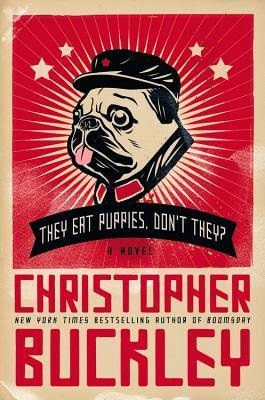
They Eat Puppies Don't They by Christopher Buckley 
Ender's Game by Orson Scott Card 
Inferno by Dan Brown
What is Mathematics, Really by Reuben Hersh  
Dragonfly by Bryan Burrough
Into The Wild by Jon Krakauer
Song of Spider-Man by Glen Berger
Some Remarks by Neal Stephenson

Books Heard
I'm A Stranger Here Myself by Bill Bryson 
Zombie Spaceship Wasteland by Patton Oswalt
Attempting Normal by Marc Maron
Rob Delaney: Mother. Wife. Sister. Human. Warrior. Falcon. Yardstick. Turban. Cabbage. by Rob Delaney 

Comments


Dave Barry is the king of outlandish Florida satire. His newspaper columns did much to illuminate the craziness that went on in South Florida daily. His Year In Review articles always skewer and dissect the previous year. His new novel is Insane City and takes place in the weekend leading up to a destination wedding in Miami Beach. Plenty of insane things happen involving yuppies, gangsters, erotic dancers, and an orangutan. That the orangutan is perhaps the most vividly drawn character is a concern.

While the novel is wildly funny in places, overall it seems like some punches are pulled. Barry in a reading at Politics and Prose said that everything in the novel could happen. And perhaps that is part of the problem. In a world with Carl Hiaasen and Tim Dorsey, Dave Barry seems oddly tame. We have come so inured to Florida whackiness that mere truthiness doesn't cover it any more.


Catching Fire is the second installment in Suzanne Collin's young adult (there needs to be a better phrase for that genre) dystopian trilogy. Sequels have a problem in that a lot of the world building novelty has already been spent. But the 'universe' of Hunger Games was a bit thin so there was still plenty of world to mine. 

The books are told completely from the perspective of Katniss Everdeen which makes her awareness or lack thereof a more plausible plot device than in the movie version which is more omniscient. That plot involves the reaction of the Capitol to her subverting the Games in the first book. So in the second book they trump a special Survivor reality show style All-Stars Edition. This effectively raises the stakes since all the players are previous winners. 

I won't say the ending is Empire Strikes Back-level unfulfilling because the Games do reach their logical finale but it also clearly sets up the last book (which will be two movies). I find myself much more eager to read the finale than I was to read the second one. The stakes have been raised and the tension and drama have gone past the Game.


For a very different dystopian future than the Hunger Games universe, the grim one in Super Sad True Love Story by Gary Shteyngart is more plausible and frightening. In the near future, the United States has become an economic vassal of China and the increasingly totalitarian government has a stranglehold on most people's lives.

Lennie is a deluded sad sack employee of a start-up trying to market life enhancing quasi-singularity procedures to the uber-wealthy. He meets and falls in love with a particularly vapid Korean-American woman in her early 20s. The book alternates chapters between the two writing in their online diaries about their relationship which is never quite stable. Meanwhile the ongoing economic crises shatter their lives on a regular basis.

The tone of the book is very reminiscent of 1984 with its increasingly powerful surveillance state. While exaggerated for comic effect, the trends it extrapolates are real and frightening.  

Lately, Christopher Buckley novels have been ambitious failures and They Eat Puppies Don't They is no exception. One half of the book follows a military industrial complex lobbyist as he tries to work up an astroturf campaign to make China a evil empirish enemy. He is aided by his eventual lover, a dynamo super-conservative woman who is everything Ann Coulter thinks she is. Together they manipulate the public relations complex that really runs Washington.

Less successful is the other half of the book which navigates the palace intrigue of the Chinese politburo as players behind the scenes react and pro-act to the provocations from the US. Embedded in all this are attempts on the life of the Dalai Lama. While the intrigue is seemingly well researched it never quite reaches the levels of absurdity needed.  

In anticipation of the movie release, I went back and reread Ender's Game which I first read in the late 1980s and I even met Orson Scott Card at a science fiction convention.

The book holds up surprisingly well considering that some of the key plot devices such as internet chats and message boards were glimmers in a programmer's eye when the book was written.

Somewhere along the line, this novel got marketed to the middle school set, and while I can see how the young uber-competent protagonist fits in, there is a lot that older readers can appreciate as well. The character of Ender Wiggins as he battles both the military bureaucracy and the aliens faces a lot of ethical questions. The biggest question of course is whether the ends justify the means. And if the ends were justifiable at all.

I look forward to reading this again in another twenty years or so.

Dan Brown is one of my guilty pleasures. Although 'pleasure' is perhaps too strong a word. It's more of a hate relationship. He is such a bad, bad writer. Every page is cringe inducing. The techno-McGuffins are always warmed over bad science fiction tropes. In Inferno, it is a super-virus destined to destroy the population, a conceit that was old when previous top-hack Michael Crichton used it decades ago.

But I am fascinated by the obsessive Frommer-esque travelogue quality of the narration. Not an action sequence goes by where the artwork in the room where the life and death struggle isn't listed in deep catalog. The endless travel trivia just entrances me. In this book, the sequences take place in Florence and Venice, two place I have been to recently, and Istanbul, a place I am dying to find an excuse to go to.

The bad taste in my mouth Brown's more than purple prose leave is countered by how it whets my appetite to see and do the things Robert Langdon misses out on while saving the world once again.
 
A nearly forgotten footnote in the history of the space program is a series of joint missions where US astronauts spent months living on the post-Soviet Russian Mir space station as practice and prelude to the International Space Station. 

Dragonfly by Bryan Burrough chronicles the calamities that afflicted those missions. First of all, by all accounts the Mir station was dump held together by baling wire and sheer persistence. Also, the Russian space program was this weirdly dysfunctional system where the real power was hidden and the cosmonauts had odd economic incentives governing their activities.

On one mission, a major fire nearly kills everyone on board only to be stunningly covered up by the Russians and ignored by the press. But the centerpiece of the book is about the incident where a runaway supply capsule cripples the station and punctures the skin of the vessel. By all rights, except for some heroic action, everyone on the station could have been killed. 

On the heels of the movie Gravity, this book which was written well over a decade ago describes in eye-opening detail just how dangerous space travel is and that fiction can rarely hold a candle to reality.

While in Alaska this summer, it seems everyone I met had a strong opinion about Christopher McCandless, the subject of the book Into The Wild by Jon Krakauer as well as the Sean Penn movie based on it. The general consensus was that he was a complete idiot with no clue what he was doing. One tourist plane pilot said that his 12-year-old daughter could have lasted longer in the wilderness.

Reading the book, Krakauer while not refuting these opinions offers more nuance and insight into what would drive a person into attempting such a foolhardy scheme. Greatly padding his original magazine article because there really is not much to know about McCandless, Krakauer muses on what motivates people to perform extremely foolhardy stunts. In a long personal piece he describes how he almost died himself failing to do a mountain ascent that had never been done.

The real story may never be known, but I now have a greater appreciation for both the Alaska wilderness and the human spirit.


I am perhaps one of the few people who appreciate what Julie Taymor was attempting to do with her much maligned Spider-Man: Turn Off The Dark musical. While making a thrilling theatrical show, she was also trying to explicate the myth-making process. One person who kind of understood that was her cowriter Glen Berger who has written Song of Spider-Man to give his side of what is generally considered the biggest disaster in theatrical history despite a three year run on Broadway.

As a first person story, it is very self-aggrandizing apologia, often anchored in false self-deprecation. He does his very best to show that he is a victim. He even literally tells how his dog died while the show was in production. Very early in the book he talks about how he was told to support Taymor but he turns out to be her Judas. He is the one who survives the putsch which ousts her only to whine about how the script doctor who takes her place gets full billing despite only being on the job for a few months.


I have read literally thousands of pages of Neal Stephenson so it amused to no end that one of the items included in his grab bag collection Some Remarks is only one sentence long. The unfinished (and barely started) novel is "Under-Constable Proudfoot" and in this era of cross-genre thrillers, he is leaving a gold mine on the table.

The centerpiece of the collection is his epic essay about transoceanic underground cables "Mother Earth Mother Board" which first appeared in Wired Magazine. I read it when it first came out and have re-read it a few times online. The research he did informed several subplots in Cryptonomicon.  It never ceases to amaze me how prescient and important this essay was.

The other items are also interesting, although he is never going to convince me to use a treadmill desk. 


Bill Bryson books make for great listens when traveling as I have done just that with several of his books. This collection was a great Audible deal (no link since I don't get a kickback) since it included three of his earlier books. Unfortunately the only one I made it all the way through was I'm A Stranger Here Myself as the other two were just a little too twee and dated. 

I'm A Stranger... is a collection of essays detailing his return back to the United States after decades of living in Britain. The observations are sharp, trenchant and funny. He does have a particularly good way of pointing out the foibles of American culture. Since these were originally articles, there is some repetition of jokes and anecdotes but he makes for a very funny tour guide, even to his home country.

Patton Oswalt is one of those fringe pop cultural touchstones who is either everywhere or nowhere depending on your particular bent. For me he seems ubiquitous, even having a recurring role on the under-rated space-opera Caprica. So it just seems fitting that his memoir is titled Zombie Spaceship Wasteland.

I was surprised and delighted to learn that he grew up in the Northern Virgina DC suburbs which made his stories of his misspent youth especially relevant. Despite his being perhaps a decade younger than me I recognize the nerd-adjacent scene he traveled in. The middle part of the book is also a particularly good insight into the process of becoming a standup comic.

The book never quite comes together and perhaps that is because Oswalt is still finding his way.

Far more established is Marc Maron, a formerly forgotten comic, who has made a second career as an insightful and probing podcast interviewer. The title Attempting Normal is just so completely dead-on.

Maron spends a lot of time going over his drug-fueled road to ruin that was his early career. It shows that he has genuinely earned his world weariness. He honest and candid yet oddly optimistic.

He does protest too much about his relationship with cats. He clearly is a cat person, for better or for worse.

As stand-up comic with a podcast, a book, and a TV series all plowing the same ground, I felt a little too familiar with some of his stories as he has used much of this in either his act or in interviews either on his show or with others. But he is still a fascinating character.

Substance abuse and recovery is a disturbingly common theme in books by comics and Rob Delaney with his Dada-esquely subtitled book
Rob Delaney: Mother. Wife. Sister. Human. Warrior. Falcon. Yardstick. Turban. Cabbage is almost archetypically true to form. The centerpiece of his recovery story leads up to the car accident which nearly kills him.

Like Maron, he pulls no punches in either describing his early excesses or the hardships of recovery. Like Maron, he is a person whose career was written off but discovered stardom in a new medium, in this case Twitter. Lately now that he has become the posterboy for tweeting one's way to the top, I find his stuff less spontaneous and edgy. But that is the curse of anyone who has ever followed an obscure band only to watch them hit it big. 

Meta-Comments

I don't usually do any follow-up thematic summaries at the ends of these posts, but since I've bundled eleven months of reading into a single article, I can't help but notice some patterns. One is that I really didn't read that much this year. Perhaps half as much as previous years. I ought to go through old posts and pull some stats out.

Secondly, I seem to be very comfortably ensconced into a few niches. I probably need to widen my netcasting a little bit but I'm not sure how to do that. There is just so much out there and life is too short to read bad books for the practice any more.

Monday, December 30, 2013

BooksFirst January 2013 NaJuReMoNoMo

Books Bought
none

Books Read
Of Mice and Men by John Steinbeck
The Old Man and the Sea by Ernest Hemingway
To Kill A Mockingbird by Harper Lee
One Flew Over The Cuckoo's Nest by Ken Kesey
Too Close To Miss by John Perich

Books Heard
A Member Of The Wedding by Carson McCullers

When I was in college, knowing I was never going to get a decent literature background, I made sure to read 'good' books on my quarter breaks. I started with Crime and Punishment because I had never gotten through it when it was assigned in high school. In a couple of years, I had managed to fill out my reading list pretty well with Hemingway, Dickens, Austen, Dostoevsky, Nabokov, Updike and more. But there were still holes in my self-education so for National Just Read More Novels Month I took a $20 Groupon down to the local used book store and stock up. And while I didn't get through everything (The Picture of Dorian Gray stopped me dead in my tracks), I now feel at least as well read as the typical high school sophomore.

I first read any Steinbeck at all when my son was in high school and he was assigned The Pearl. Just recently on a trip I read Travels With Charley (reviewed here) but I felt I was missing the essence of Steinbeck. Not wanting to tackle The Grapes of Wrath, I decided on Of Mice and Men which was a good call. I found the story gripping and a fascinating character study.

The book is quick and breezy but not simple. There is plenty of nuance. And the ending is, of course, heart breaking. The relationship between George and Lenny is one of the more complex ones for a book this short. The protectiveness over the mentally challenged lug is misunderstood by the other characters.

And of course it has one of the saddest, most tragic ending in literature. Often parodied, the original work is just heart-wrenching.

Of the books that are immediate metaphors, Ernest Hemingway's The Old Man And The Sea is one of the most famous. The entire book, novella really, is all about Perhaps the most widely read book I have never read, in places it reads almost like Hemingway parody. Or perhaps this is the genius of Hemingway.

The titular old man goes fishing and snags a huge swordfish. The rest is an exercise in irony. Is it a spoiler to say that the fish doesn't make it back to the beach.

The story is compelling but it just seems so completely over the top with machismo in today's society. Perhaps this was blunt and new when the book first came out but now it seems dated and silly.
To Kill A Mockingbird is by far the biggest omission from my middle school reading list. I'm not sure how one gets a high school diploma without having ever read it but I did. The appeal of this book to English teachers is how brain dead simple it is to write an essay about. Everything, and I mean everything, is literally black and white. The good guys are great and the bad guys are genuinely evil.

The Harper Lee novel is more interesting as a historical document. Like another classic Southern novel, Gone With The Wind, it was the sole notable work of a woman describing a particular era. In the case of To Kill A Mockingbird it is the Civil Rights era South rather than the antebellum version. It deals in a revealing way with the casual segregation and racism is way that seems dated to the modern reader. What was obvious to the reader of the 1960s is now perplexing.

Also is the odd literary coincidence that Harper Lee's childhood friend and inspiration for the character of  Dill Harris is noted writer in his own right Truman Capote. Much speculation has been done on how much, if any, influence he had on the book. Not having read any Capote I suspect that it is some but not a lot.


Decades ago I read The Electric Kool Ade Acid Test by Tom Wolfe which is the New Journalism take on Ken Kesey's role in the formation of 1960s counter-culture. Surprisingly, I have never read One Flew Over The Cuckoo's Nest, the book that catapulted him to fame.  Like all the previously mentioned book so far, it is imposible to not know of this particularly in light of the equally famous Jack Nicholson movie.

Having never seen the movie either (much like To Kill a Mockingbird) I was able to read the book with a minimum of prior prejudice. While I knew the broad outline and the characters, the book exceeded expectations. In particular the framing device of having the story told by The Chief. It adds a certain hallucinogenic quality to the narrative. 

And of course, Randle McMurphy and Nurse Ratched are two of the best characters invented. One a joking trickster and one a controlling authoritarian of the highest order. The conflict between the two sets up a war of wills. 


John Perich is one of the contributors to the website Overthinking It and Too Hard To Handle is his second book, a sequel to Too Close To Miss. Mara Cunningham is a Boston-based photojournalist whose deadbeat criminal brother comes back to town. Soon a cop is dead and her brother is seen on surveillance tape.

This leads Mara on a hunt to find her brother before the cops do. But the story is more complicated and there are secrets people don't want uncovered.

In both the Boston setting and the gritty realism, the world of Dennis Lehane is evoked. There is a reason that most thriller series feature people in jobs which brings them into contact with  the underworld. In trying to expand the Mara Cunningham series, the problem for Perich it to come up with additional plots which raise the stakes while creating  a sense of intrigue.

In the realm of Southern Gothic literature, A Member of The Wedding by Carson McCullers is one of the of archetypal works. Working in roughly the same small town milieu as To Kill A Mockingbird, it is the story of tomboy Frankie Adams whose brother is getting married. Like Mockingbird, there is a black housekeeper and a junior sidekick cousin. However, the story is much more nuanced and complicated. The first part of the book is all about Frankie buying a dress for the wedding. While wandering around town, she meets up with a soldier on leave who is unaware how young she is. When she later meets the soldier at the bar and he takes her up to his room, her naivete about the situation she is in becomes extremely uncomfortable.

 It's an oddly disturbing book featuring an unreliable juvenile narrator. The wedding itself is only described in flashback. This particular audiobook was narrated by Susan Sarandon who adds a delightful southern lilt to the story. 

Sunday, December 30, 2012

BooksFirst May-December 2012

Books Bought
The Illustrated Man by Ray Bradbury
American Gods 10th Anniversary Edition by Neil Gaiman (Kindle edition)
The Old Man And The Sea by Ernest Hemingway
To Kill A Mockingbird by Harper Lee
One Flew Over The Cuckoo's Nest by Ken Kesey
Casino Royale by Ian Fleming
The Picture of Dorain Gray by Oscar Wilde

Books Read
J Is For Judgment by Sue Grafton
Blackout by Connie Willis
All Clear by Connie Willis

Books Heard
Man Made by Joel Stein
Girl In A Bar by Rachel Dratz
You're Not Doing It Right by Michael Ian Black
 
Comments

Riding out my NaJuReMoNoMo resolution to catch up on my Kinsey Millhone novels, I read the (counting on my fingers) tenth installment J Is For Judgment. In this one, Kinsey is sent to investigate a man who has possibly faked his own death to run off with the proceeds from his rapidly failing real estate investments. This results in a very funny scene with her hopping from balcony to balcony in a Mexican resort hotel. complicating the investigation is the putatively dead man's new mistress and the legal troubles of one of his abandoned sons.

The more interesting story arc in this book is learning of Millhone's long-lost relatives in the area. This gets into some backstory of how she came to be raised by her aunt but never told of the rest of her family. 


Blackout/All Clear is a massive two-part novel which takes part in the award-winning time travel series written by Connie Willis. It is World War II and historians have been sent to Blitz in London, the Dunkirk evacuation, and the D-Day preparations. But then things go Horribly Wrong as they tend to do in time travel stories, particularly when told by Willis.

At over 1400 pages, the combined novel is just an enormous doorstop and basically brought my reading to a standstill for several months. The various narrative threads are very hard to keep track of despite the time stamp at the start of each chapter. Since the historians adopt aliases while working undercover, they go by their real names and their cover names adding even more confusion.

The books are clearly the result of meticulous research border on an almost Michneresque level of detail only without the broad scope. The centerpiece of the story involves an air raid which nearly burns down St. Paul's cathedral but this happens about halfway through the story. It is not until the last 200 hundred pages or so that the various subplots start to tie together. And they do all tie together very well but there are still way too many. This book could and should have been cut by at least a third.

Joel Stein is writer whose journalism, if it can be called that, is something I have laughed at for years. He often self-deprecatingly ridicules his geekiness and lack of masculinity as well as his penchant for pornography. He has rolled all of this up into his book Man Made. In this book-length bit of stunt-journalism he resolves to man-up to be the man he needs to be to father his forthcoming son. To this end, he undergoes basic training, goes hunting, and becomes an ultimate fighter. The book is in parts hilarious but the schtick starts to wear thin soon. There are only so many macho yet sensitive men he can feel inferior to.

And as a piece of stunt-journalism, a genre which has come increasingly popular, it is particularly unfocused. There seems to be no real deadline or goal. The narrative goes on well past the birth of his son and just devolves into random events. Sometimes extremely funny writers have a hard time keeping the laughs going over long pieces and this is one such case.

Rachel Dratch was one of the more overlooked and typecast Saturday Night Live regulars. The most notable point on her post-SNL career is being cut from 30 Rock early in the first season. She dispatches her version of the story very early in Girl Walks Into A Bar... and she seems genuinely unbitter over it. The first half of the book is typical comedian biography (I am becoming a little too familiar with this genre) but then the story picks-up. As a 40-something single woman she finds herself unexpectedly pregnant. How she copes with this extremely life changing event is both funny and touching.

I've mentioned before that I prefer comedians read their own books and this one is a great example of why. The way she makes the word "Universe" ring every time she goes into Oprah-esque mysticism adds just the right touch. If you've loved Tina Fey's Bossypants reviewed here), this is the near-perfect companion book.

Another entry in the very crowded field of audiobooks written and read by comedians is You're Not Doing It Right by Michael Ian Black. Like Bill Engvall (reviewed here), the major event in his life seems to be meeting and marrying his wife. Unlike Engvall, this book is a little more idiosyncratic and the self-deprecation (an important common element in all books by comedians) is more honest and revealing. He really is a dick a lot of times.

Some of the stories are just hilarious. He and his wife getting stoned in a Amsterdam coffee shop is pants-splittingly funny. Unfortunately, a lot of his stories follow a fairly defined formula. He says "I would never do {blank}." And then a few sentences later he says "I did {blank}." It's funny the first several times but then it gets tiresome. And like the memoir by Mindy Kaling (reviewed here), he never seems to have encountered any real career setbacks to speak of.

There is a very serious section about how he deals with depression which is just raw. He gets a lot of credit for honesty but the execution is just a little weak.


BooksFirst February-April 2012


Books Bought  
Hammerhead Ranch by Tim Dorsey
Orange Crush by Tim Dorsey

Books Read 
 Hammerhead Ranch Motel by Tim Dorsey
Too Close To Miss by John Perich
Travels With Charley by John Steinbeck
 
Books Heard 
Just A Guy by Bob Engvall

Comments 

 Tim Dorsey continues his satirical look at the dark underbelly of Florida in Hammerhead Ranch Motel, the second book of his series without a real title. And by 'satirical', I mean 'totally realistic'. The scary part about such a rambling over-the-top mess is how little is really fictional. Sure, Dorsey changes the name of Bubba The Lovesponge to Boris the Hateful Piece Of Shit ( a not very subtle dig), but it's enough of the same person to be libelous if not true. In this installment, the macguffin from Florida Roadkill is now in the greater Tampa area and a oddball assortment of sociopaths, drug dealers, gangsters, and other Florida fauna are chasing after it.

I read this book while on vacation at Rocky Point and the geography of the Pinellas County and greater Tampa is stunning accurate. Most of the action in the book takes place in and around the titular motel which is haven to a scam artist drug dealer and several itinerant parties involved in what loosely could be described as a plot. Coherent narratives do not seem to be the strong suit of Dorsey but the characters are fresh and memorable.

John Perich is a contributing editor to the Overthinking It website and podcast. In addition to his duties on that site, he has written Too Close To Miss, a thriller novel set in his adopted town of Boston. Now Boston is no stranger to mystery writers with both Robert Parker and Dennis Lehane walking that side of the street already. To compete in a crowded thinking space, Perich has attempted to subvert a few cliches of the genre. For one, the heroine is the mistress. When a prominent politician's wife is brutally murdered, newspaper photographer Mara Cunningham becomes the prime suspect and she has to clear her name.

I'm fond of mysteries with a little intellectual heft behind them, the books by John D. MacDonald and Sue Grafton come to mind, and this book fits well in that niche. It's not too spoilery to say that there are suspicious land deals involved, a staple of the Travis McGee series. Like all thriller heroes, Mara is just perhaps a little too hyper-competent. For one, she teaches martial arts on the side, a skill that comes in handy when the baddies start stalking her.

What is perhaps notable about this book is that Perich has decided to self-publish in as a Kindle-only format. And despite the sketchiness of the self-published novel, this book stands as a peer with anything published by a major house.

I first read anything by John Steinbeck when my son read The Pearl in high school. To close this major blindspot I decided to give Travels With Charley a try. This an atypical book from Steinbeck in that it is a travelogue rather than a novel with the titular co-travel being his aging poodle. The two take off in a pick-up truck and do a lap of the United States. It does seem to take them an inordinate amount of time to get out of New England.

It surprised me that the book was written in the early 1960s as I tend to associate Steinbeck with the Great Depression. This becomes a factor when he makes his way to segregation era Texas and the Deep South. At that point the story becomes a little more reportorial as he spends a good time discussing the opposition to school integration in a small town. As with the rest of the book, he lets the people he meets talk without a lot of authorial editorial, but the people encounters here don't always show their best side.

I greatly appreciated the nuance and charm that Steinbeck brought to the book. It's nostalgic without being maudlin, introspective without being navel-gazing.

My go-to choice for audio books to listen to on road trips has become books written and read by comedians. There is something about having it read in their own voice that brings an immediacy to the story. Bob Engvall is one of the Blue Collar Comics, not as funny as John Foxworthy, but not nearly as cringingly bad as Larry The Cable Guy.

Presumably the book title Just A Guy is one of his catch phrases which he repeats a few times in the book but not to the point of annoyance. Mostly the book is about his early days as a stand-up comedian and the wooing of his wife Gail. Based on his self-deprecating stories, she is a saint for putting up with him, a judgment I could concur with. Towards the end of the book the schmaltz gets amped up to ten but that is a minor annoyance.

Much like Engvall himself, this book is good middle-of-the-road entertainment with few major revelations but a couple of clever insights.


BooksFirst - January 2012 (NaJuReMoNoMo)

Books Bought
Hunger Games by Suzanne Collins (Kindle)

Books Read
F is For Fugitive by Sue Grafton  
H Is For Homocide by Sue Grafton
I Is For Innocent by Sue Grafton  
Hunger Games by Suzanne Collins

Comments

I'm a collector of Sue Grafton's Kinsey Milhone novels. Sadly, I buy many more than I read, so as part of National Just Read More Novels Month, I resolved to careen through the backlog. As you can see by the Books Read list, I fell woefully short. This does nor reflect poorly on Ms. Grafton, quite the contrary. Her books are well-crafted and require a fair amount of attention to be paid. I know for a fact that I have read the first four of her novels but my memory on the fifth was a bit hazy so I decided to jump to the sixth, F is For Fugitive, just for safe measure. The titular fugitive is a guy who was convicted of a murder and then escapes from prison only to go on the lam again. His relatives hire Kinsey to clear his name but things go awry when new crimes go haywire. For this book, Milhone decamps from her native Santa Teresa to Floral Beach, a small beach town with a lot of dark secrets. Within this Peyton Place-ish enclave there is a lot of history some people would just prefer stayed hidden. Part of the strength of this book and Grafton's novels in general is that all the characters are interesting and complex. They all interact in ways that tie the history of the town together but still make finding the final culprit a challenge and a surprise.

 More linear is H Is For Homocide where Kinsey goes undercover to get the goods on the sociopathic ringleader of an insurance fraud ring. She spends most of the novel just trying to keep from being discovered as she walks a narrow path between keeping her cover and protecting her life. More action oriented than some of the other mysteries, it also seems more prone to random set-ups. Kinsey gets involved when a meeting with a fraud suspect also involves an old school friend and the evening ends in a shoot-out. For there things go even further off the rails. There is also at least one unjustified final twist. I don't know whether it was meant to set up future storylines, but it just seems random.

 For a writer, a series character can be quite restrictive so a little playing with the form is good, but in this case it doesn't really pay-off. In I Is For Innocent, Kinsey is back on her home turf of Santa Teresa investigating an acquitted murder suspect trying to get his dead wife's money. As usually happens there is more than meets the eye and the private investigator Milhone is following up on died under mysterious circumstances as well. The word 'innocent' is used rather ironically because the cast of characters is a little more blue-blooded than usual but still rather despicable. Normally I find the scenes about Kinsey's neighbors and her home life to be boring filler, but this one had a good subplot. Her friend and octogenarian landlord's brother shows up only to start carrying on with the Hungarian diner owner. It's funny and endearing.

Hunger Games by Suzanne Collins is the latest phenomenon. I've been seeing it and its sequels in bookstores for years and have been dismissing it as some sort of cousin to the sexy vampire genre. Needing a quick read on my Kindle for a plane trip, I bit and bought it. It turned out to be many things that were not tropes in the Twilight-ish world I dreaded. It was fast paced. The romance was underplayed, indeed subverted. And the heroine was genuinely an agent of her own destiny.

It was far from flawless though. There are huge plot holes and tons of inconsistencies. The one item which just nagged at me was a nitpick I have with a lot of dystopian fiction and science fiction in general aimed at teenage readers and even older readers. That is that the economics of the post-apocalyptic world make no sense whatsoever. The Capital is this huge post-modern marvel with mind-boggling technology. But its all based on what seems to be a very small base of the outer districts. District 12 doesn't seem like it would support a decent suburb's energy needs let alone an entire country. And what are they doing still mining coal anyways?

There is also way too much lead-up to the Games themselves. It's well over half the book before kids start killing each other. Oddly, the premise of teenagers battling each other to the death is one of the least of my problems. As a plot device and a metaphor I think it works very well. I am totally unfamiliar with the sources people claim it resembles such as The Running Man and Battle Royale, but this sort of set-up goes at least as far back as The Biggest Game and Lord Of The Flies, so there is plenty of prior art to lean on.

I understand that the sequels delve deeper into the politics of the world and I'm a little hesitant to continue on since this was what I found least satisfying.